
Navigating the Price Maze: Cost to Remove Tile Flooring

- Diane Hammer
- Updated on: July 31, 2025
Facebook
Twitter
LinkedIn
Pinterest
Table of Contents
The cost to remove tile flooring depends on several key factors but it usually costs between $3.25 and $6.5. This article will explain all the aspects that determine the expense and time of a project along with some useful tips to help you through your renovation and give you an estimate of the average tile removal cost.
Essential Highlights
Tile removal costs $3.25 to $6.5 per square foot, with labor forming most of the expense. The method of removing tiles matters as the traditional method costs less than the dust-free or dustless technique. Some other parameters include the tile and adhesive materials, area, and location. While removing tiles, some safety measures should be taken as during cutting and removal of tiling, considerable debris is produced which is dangerous if inhaled.
Estimating Tile Removal Cost
Tile removal is a difficult endeavor and sometimes during a project, a new challenge is unveiled, adding more complexity. Removing floor tiles has an average cost of $3.25 to $6.5 per square foot. For a space of 300 square feet, the cost of tiling demolition can incur a sum between $ $879 to $1,786. Labor is the biggest part of expenditure and would span from $725 to $1600.
Average Tile Removal Costs
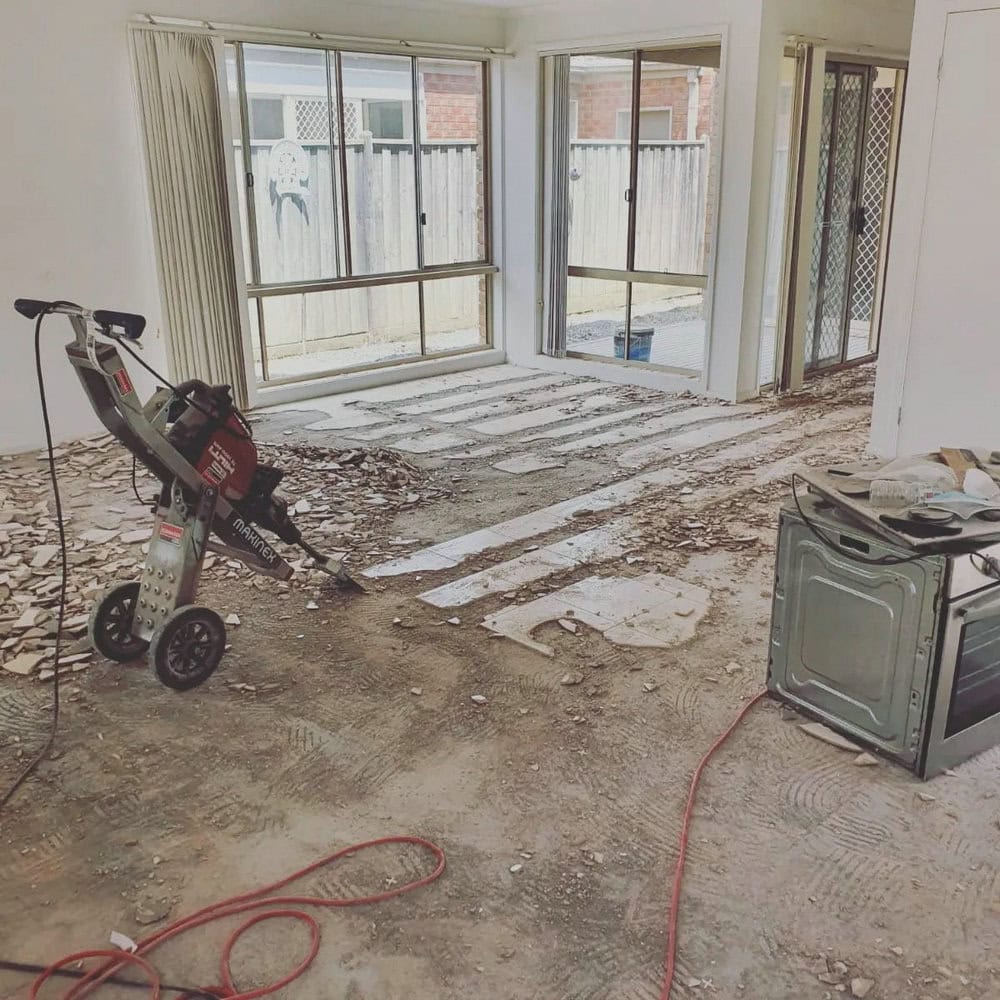
Typically, tile demolition falls between $2 to $6 with $4 being the mean. As per Homewise Calculator, the starting price for tile removal per square foot is from $2.79 to $5.10 while according to homeguide.com, it is $2 to $7. Tile demolition rates vary between $3.25 to $6.5. The per-square-foot price is contingent on the local labor rates, the procedure of demolition, the location, and the type of tile and adhesive. A room’s area affects the aggregate price as the larger the space the higher the bill. For a room spanning 100 to 300 square feet, the cost is $200 and $1,800.
Manual vs. Mechanical Tile Removal
Manual demolition of tile is very economical and can cost just $1 per square foot. It has a major downside of being slow. Mechanical tile removal means demolishing tiles by employing modern equipment. It is a faster method which causes the price to spike from $2 to $5 per square foot. Choosing between manual or mechanical modes of tile removal is a critical decision and will dictate the cost and time of the project.
Dust-Free Tile Removal Costs
Opting for dustless or dust-free methods is more expensive and its average price is $7 per square foot. These techniques greatly reduce tile dust being spread in a room during renovation.
Factors Influencing Tile Removal Costs
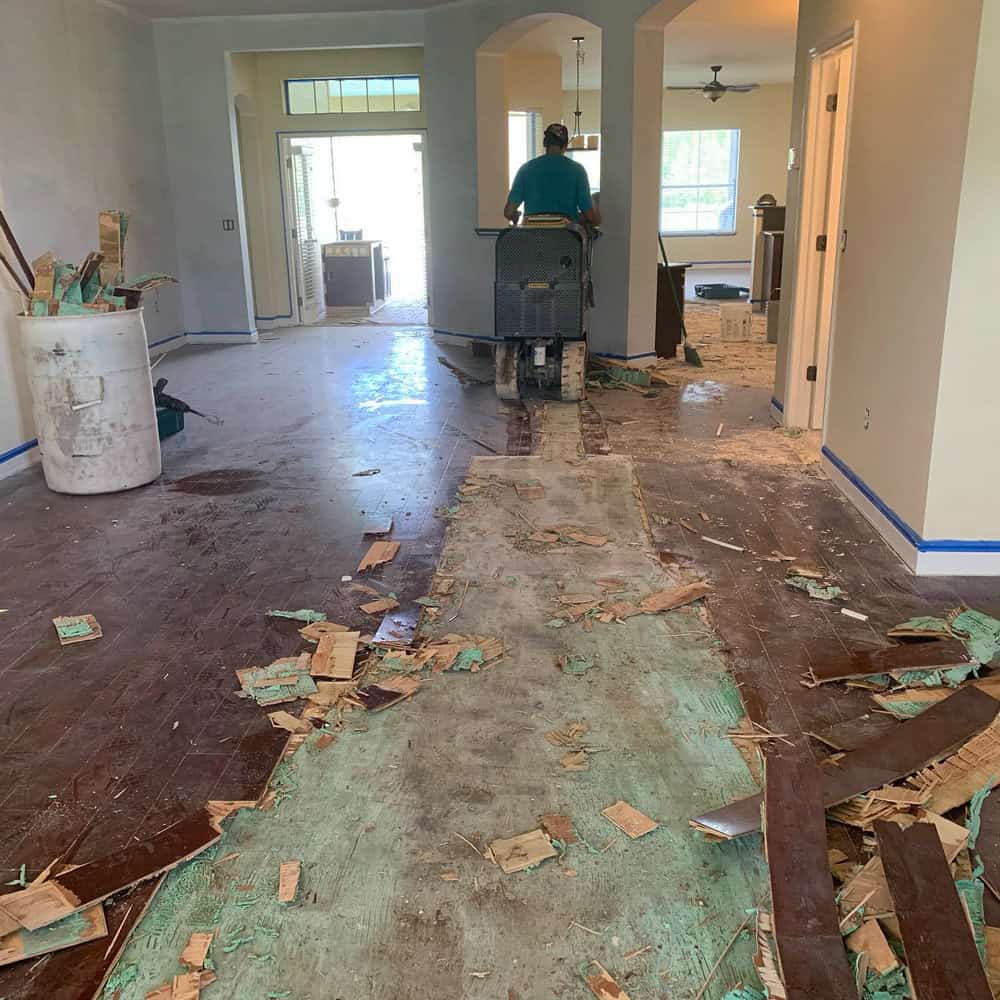
Many aspects come into play when estimating the price of a tile removal job.
The types of tile and adhesives direct cost as higher quality products are more durable, making them difficult to remove. The size and accessibility of an area affect the price as larger areas require more work and equipment, thereby increasing costs. Locations that are cramped and difficult to traverse are more expensive compared to more open locations. Labor costs are a significant factor. It depends on the professional’s skill set and the locality’s rates. The addition of extra services such as tile disposal according to the area’s legality, or subfloor inspection raises the price.
Tile Type and Material
The type of tile and adhesive also affects the price of a tile removal job. More durable tiles such as stone or mosaic tiles, and slate require more effort to be removed than ceramic or porcelain tiles. Tiles fitted with stronger adhesives raise the removal cost owing to the effort involved.
Size and Accessibility
The larger the perimeters of a space, the higher the cost. Areas where tiles are difficult to access cost more than a spot having convenient access.
Additional Services
The inclusion of associated services namely, site preparation, cleanup, or tile disposal among others also influences the floor tile removal cost. For instance, disposing of removed tiles according to the regulations of a locality costs $130 to $380 so it is up to the contractor to include it in the contract or have it as a separate option.
Labor Costs for Tile Removal

Per square foot, labor rates in tile removal costs $2.5 to $7. Labor forms the biggest expense throughout the process. It varies according to the labor rates of a locality. It is more suitable to look for contractors close to your site as those from faraway areas would raise their prices due to increased commutation. Similarly, if a project takes more than one day, the homeowner may need to bear the contractor’s lodging expenditure.
Professional Tile Removal Rates
A professional contractor may charge around $20 to $40 per hour. The key advantages of a contractor are the availability of suitable tools and technical expertise regarding a job. If you want peace of mind, a flooring specialist is right for you.
DIY Tile Removal Costs
The do-it-yourself approach can save a homeowner $2 to $6 per square foot as it may cost a measly $1 for every square foot. On the flip side, it needs a significant investment in equipment and safety supplies such as a mallet hammer, drill bit, safety mask, pry bar, etc. It is also demanding and time-consuming; a 100-square-foot area may take 12 hours to complete. If you enjoy a challenge, you can demolish your tiling on your terms.
Specialized Tile Removal Scenarios

Some circumstances require a specialized set of skills. Examples include overlapping tiles where tiles are installed atop another layer of tiles, tiles under or around fixtures, or uncovering hazardous substances such as mold or asbestos adds to the cost.
Asbestos Tile Removal
Asbestos is a hazardous substance that has been prohibited in the U.K. for more than two decades, starting from 1999. It is highly recommended that properties constructed before 1980 go through an asbestos test. For its removal, the cost ranges between $5 and $20 for each square foot depending on the level of contamination present. Removal professionals should have the required tools and instruments along with relevant expertise in both security and handling. In addition to its security considerations, many times asbestos brings up memories of past traumas when flooring tiles are faced with adhesive substances containing white or brown-colored fibers.
Large Scale Projects
One would expect that carrying out a large-scale tile dismantling project, such as in a commercial venue or a living room, will take a lot of energy and time to complete, hence it is more expensive than in smaller areas. Because they are bought in bulk, the price per square foot goes down compared to smaller spaces. The overall costs go high due to the labor intensity and complexity involved in managing these larger areas, often requiring specialized equipment as well as a skilled labor force.
DIY vs. Hiring a Professional for Tile Removal
DIY tile removal is more economical as a homeowner saves on paying a specialist. Hiring a professional boasts the advantages of being quicker and providing a better quality of service.
Time and Effort
Owing to experience and an array of various machines, a professional tile remover can complete a project significantly faster than a homeowner. DIY could take several days to accomplish what a professional does in hours.
Safety and Cleanliness
Professionals make sure of the safety precautions and in choosing a dust-free or dustless tile removal service, a homeowner can ensure a neat, hassle-free job. For DIY, it is the owner’s responsibility to follow safety protocols.
Preparing for Tile Removal
Remove any furniture or equipment to keep the area open and convenient for work. Before a tile removal job, it is compulsory to seal the area’s vents with plastic sheets to prevent tiny airborne particles from spreading outside the space. Power off the switches in the space.
Necessary Tools and Equipment
For removing floor tiles essential tools are a sledgehammer, a masonry chisel, a pry bar, a drill bit, and a grout scraper to name a few. More modern machines include an air hammer, heat gun, electric floor scraper, and electric grout scraper. In the safety category, some examples are heavy-duty gloves, goggles, a full-face shield, a K95 mask, a full-face respirator system, and knee pads.
Site Preparation
Site preparation can be done by a professional or a homeowner, though the former could charge fees. Use painter’s tape to attach plastic sheets so that the dust produced during removal does not reach other rooms of the property. Sufficient ventilation should be done by opening windows and using fans to help push out tile dust and avoid the collection of debris and silicate particles being concentrated in the area. Dust-containing equipment called High-Efficiency Particulate Air (HEPA) filtered vacuum can also be used.

Getting Accurate Estimates for Tile Removal
Comparing Quotes
When getting estimates for a job, it is recommended to take quotes from several contractors to get a better understanding of the price range. In the quotes, make sure the contractors have included all the related work such as site preparation, debris removal, materials cost, etc. A more experienced and proficient contractor is often more expensive than a less skilled specialist, in which case choosing the former could save you money in accidental damage to the subfloor.
Questions to Ask Contractors
An owner should ask some important questions from a contractor which are:
- Their experience in the field, to gauge their skill level.
- Their portfolio and reviews of prior customers.
- Their final price includes all the necessary work, without any hidden cost.
- To get a more accurate quote, have the space visited by a professional estimator.
- If the contractor has all the necessary paperwork and is bonded and secured.
- For homes constructed before the 1980s, an asbestos test should be done by a licensed inspector because disturbing asbestos due to renovation is hazardous.
To sum up, removing tiles is a complex task requiring thoughtful planning. If done correctly, it paves the way for a solid facelift, but if done negligently, it can harm the subfloor, possibly requiring repairs. Due to the nature of the job, tiny silicate particles are a part of the tile dust, which can cause serious health issues. But nowadays, thanks to advancements in technology and a plethora of information online, tile removal has become easier and more accessible than ever before. Hopefully, you can now decide on your tile removal project.
Frequently Asked Questions
Is It Cheaper to Remove Tile Flooring by Myself or Hire a Professional?
Removing tile by the homeowner is cheaper; it can cost as low as $1 per square foot while a contractor would charge between $ 2 to $6 per square foot.
What Factors Affect the Cost of Tile Removal?
The cost of a tile removal project is dependent on the scale and location of the tiles, tiling and adhesive type, labor rates of the area, and need for related services for example, debris removal, and tile installation.
Can Removing Tile Flooring Damage My Subfloor?
If done improperly or carelessly, removal may damage the subfloor. Hence, this type of work should ideally be done by a proper expert so that the chance of such damage is reduced.
How Long Does It Take to Remove Tile Flooring?
As a rule of thumb, a contractor can do a job faster than a homeowner, and if the specialist has access to high-powered tools, it reduces the time even more. In most cases, it takes four to six hours for a professional but several days for DIY.
Do I Need to Test for Asbestos before Removing Old Tile Flooring?
Conversely, there is a possibility for subfloor destruction when removals are done inappropriately or hastily. Thus, it is desirable that such operations be carried out only by an adequate specialist in order to avoid such destruction. Proper techniques and tools are employed by specialists to ensure that they do not cause any harm to the sub-floor resulting in a smooth removal process.
Facebook
Twitter
LinkedIn
Pinterest
Author
Diane Hammer
Diane Hammer is the Digital Marketing Manager at tileday.com, a premier platform for tiles, renovation, and home decor solutions. Digital marketing is Diane’s passion. With her finger on the pulse of industry trends, she will propel tileday to new heights.

Related Posts
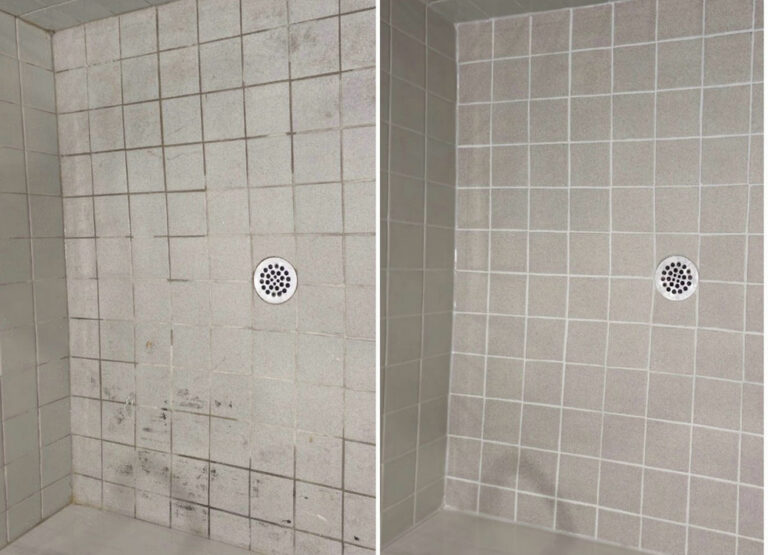
Is it always obligatory to take off the previous grout before smearing a fresh batch? If handled with extra care and follow the step precisely you can regrout on an
Table of Contents Paint a picture of a harmonious blend of kitchen tiles with other elements, that sets the world apart with its unparalleled charm. Especially, when you come across
A stitch in time saves nine, this saying syncs perfectly with the significance of grout sealing. Many homeowners have similar questions: do you need to seal grout? Grout tile sealer
Table of Contents Fret not with any concerns of time wait! We have covered you with exhaustive information on how long before you can walk on tile. The universal decree

Your favorite floor tiles may fade away over time. The instant and economical solution to this problem is the installation of LVP over floor tiles. Do not overthink the challenge.

Have you ever thought of effectively tiling over wall tiles in a bathroom? You can do it with the utmost perfection by following simple guidelines. Key Takeaways You can lay
Home renovation is an interesting task. It sounds good to renovate your home according to the latest trend. Herringbone tiles are overwhelming the renovation trend for homes. The charismatic view
Recent Posts
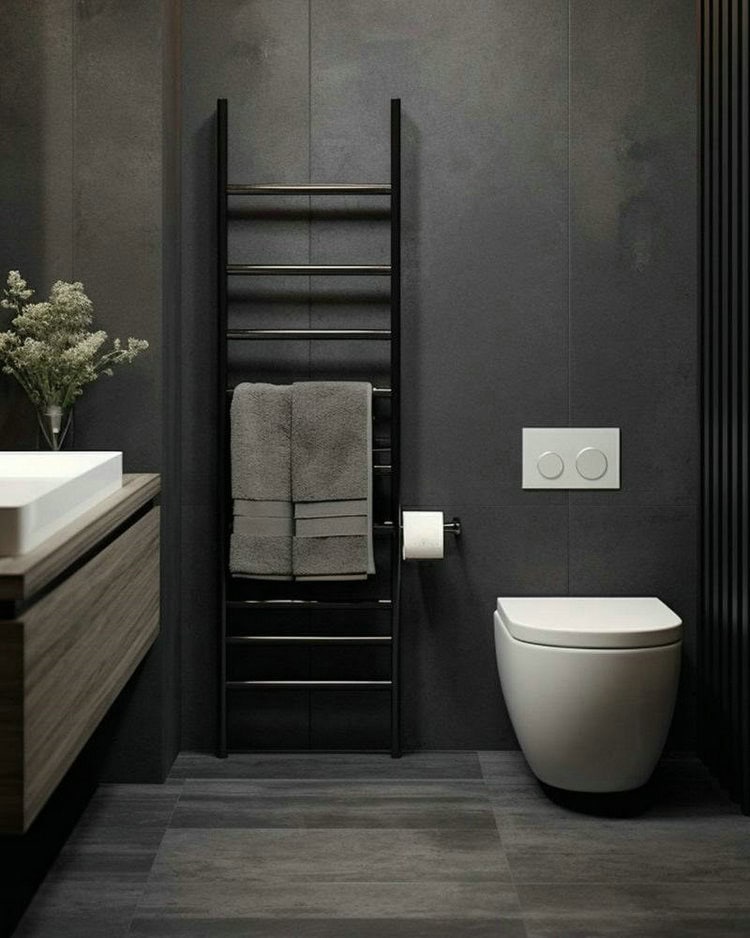
Photo credit: prestigewashrooms Welcome dark theme lovers and be inspired by dark bathroom floor tile ideas. The shiny blackish-gray wall gives the space a bold and refined appearance. It perfectly

Photo credit: co_architecture_au Look at this stunning picture of a bathroom with a walk-in tub and imagine the spa-like retreat you will get in this space. Also, the huge window
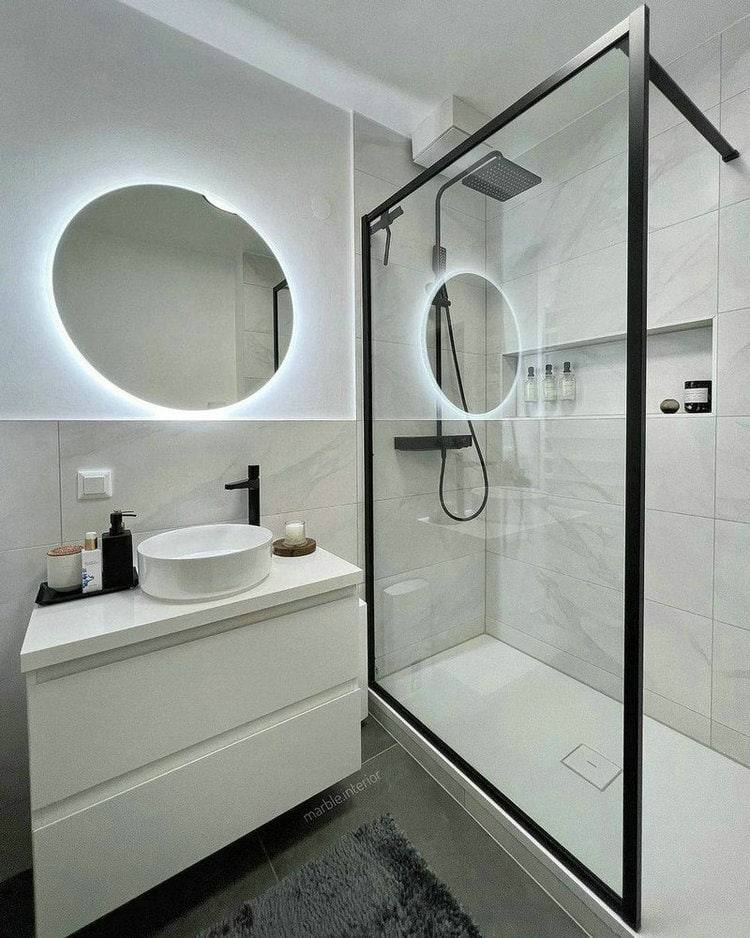
Photo credit: marble.interior Be ready to enhance your small bathroom’s appeal with black-and-white decor ideas. This small bathroom walk-in shower looks stunning with the black framed door. Add a built-in
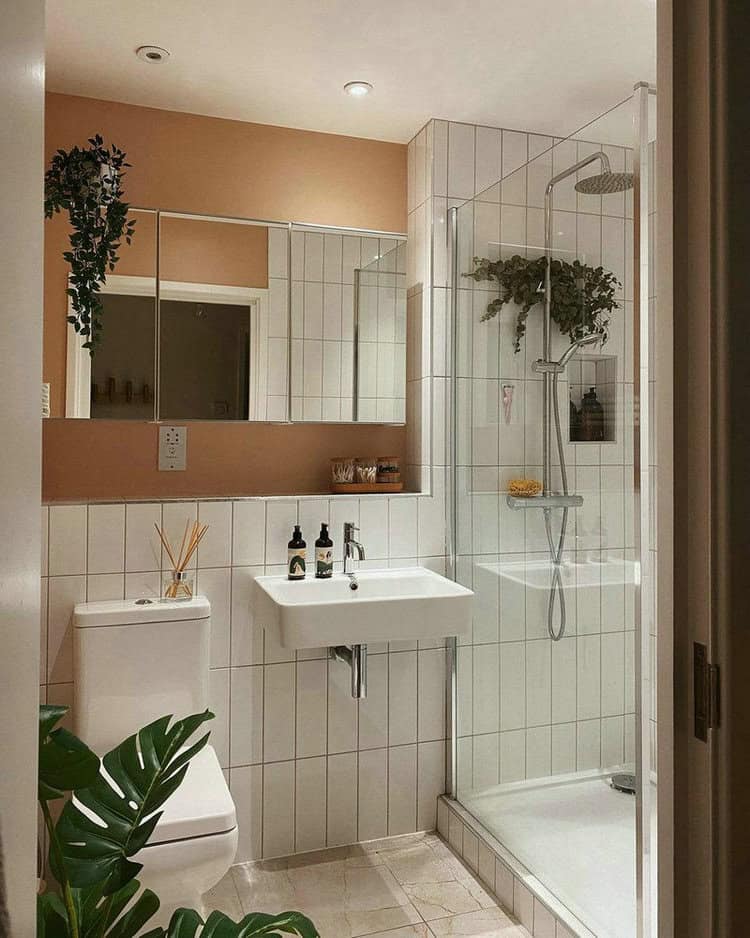
Photo credit: bintabuheh In this bathroom, the light shade color of the wall looks appealing and gives the space a calming ambiance. The vertical stack tiles perfectly complement the white

The stacked tile pattern has been a favorite with the designers and homeowners for so long. A stacked tile pattern offers a wonderful aesthetic that transforms a dull space into
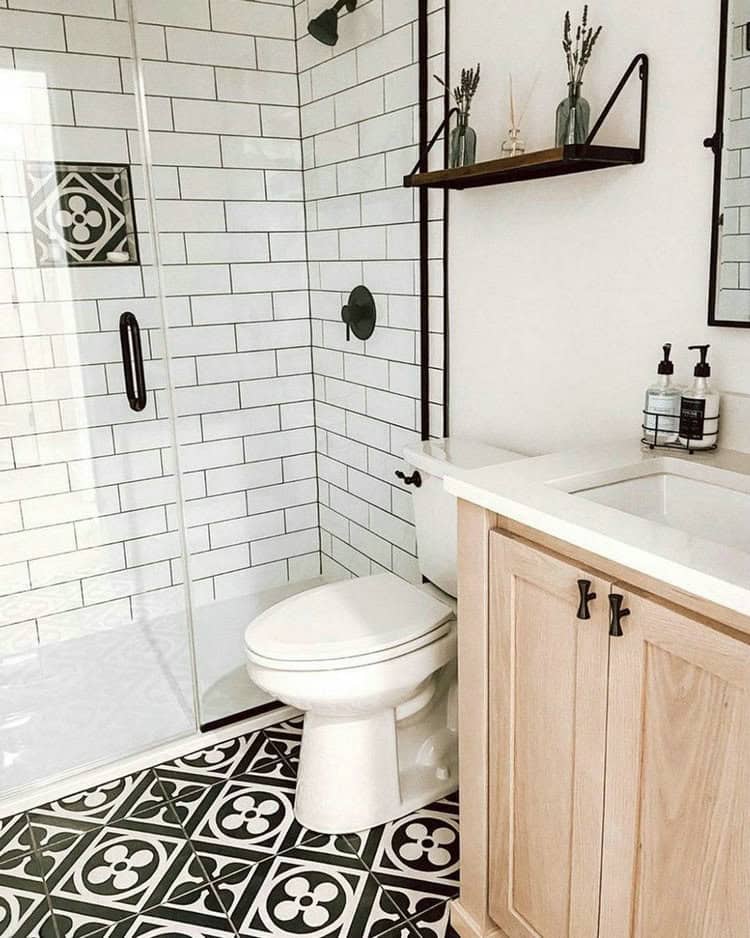
Photo credit: buildwithferguson Don’t know how to add a shower to a small half-bath? Here’s a step-by-step guide. First, do careful planning before adding a shower. Go for a compact
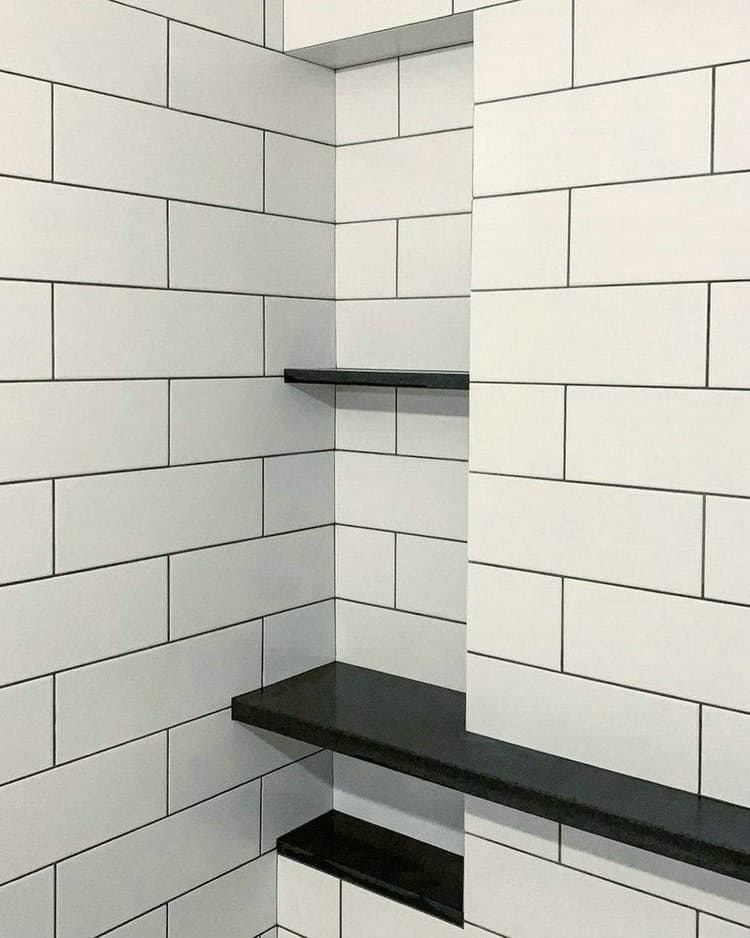
Photo credit: warmyourfloor Welcome the sense of simplicity with black and white tiles. Clean, glossy white tiles with dark grout simply create a beautiful impact. The built-in shower shelf idea
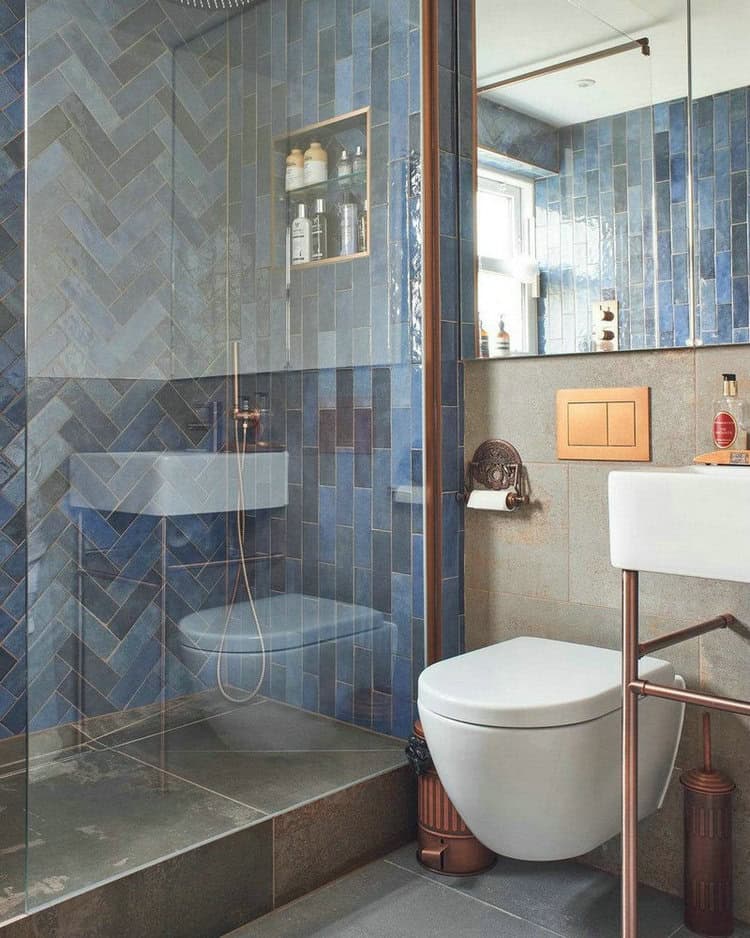
Photo credit: big_bathroom_shop For your boring shower areas, use soothing blue tones for walls. This wall idea gives a relaxing and calming ambiance as well as a touch of elegance